How Flour Mill Machines Process Different Grains into Consistent Quality Flour
Grain processing is an important part of the food production industry, supplying flour for households, bakeries, restaurants, food manufacturers, and commercial businesses. Different grains have different physical properties, textures, moisture levels, and grinding requirements. Processing these grains into consistent quality flour requires suitable machinery, controlled grinding conditions, and proper handling at every stage.
Modern flour milling equipment is designed to process wheat, maize, millet, rice, and other grains according to their individual characteristics. These machines help control particle size, improve production efficiency, and maintain uniformity throughout the grinding process. From small-scale flour production units to large commercial milling facilities, selecting appropriate machinery plays an important role in achieving reliable results.
Understanding how flour mill machines work, how different grains are processed, and which factors influence flour quality can help businesses make better equipment decisions and improve their production operations.
1. Understanding How a Flour Mill Machine Works
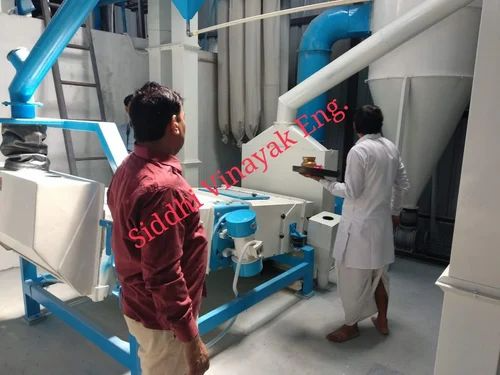
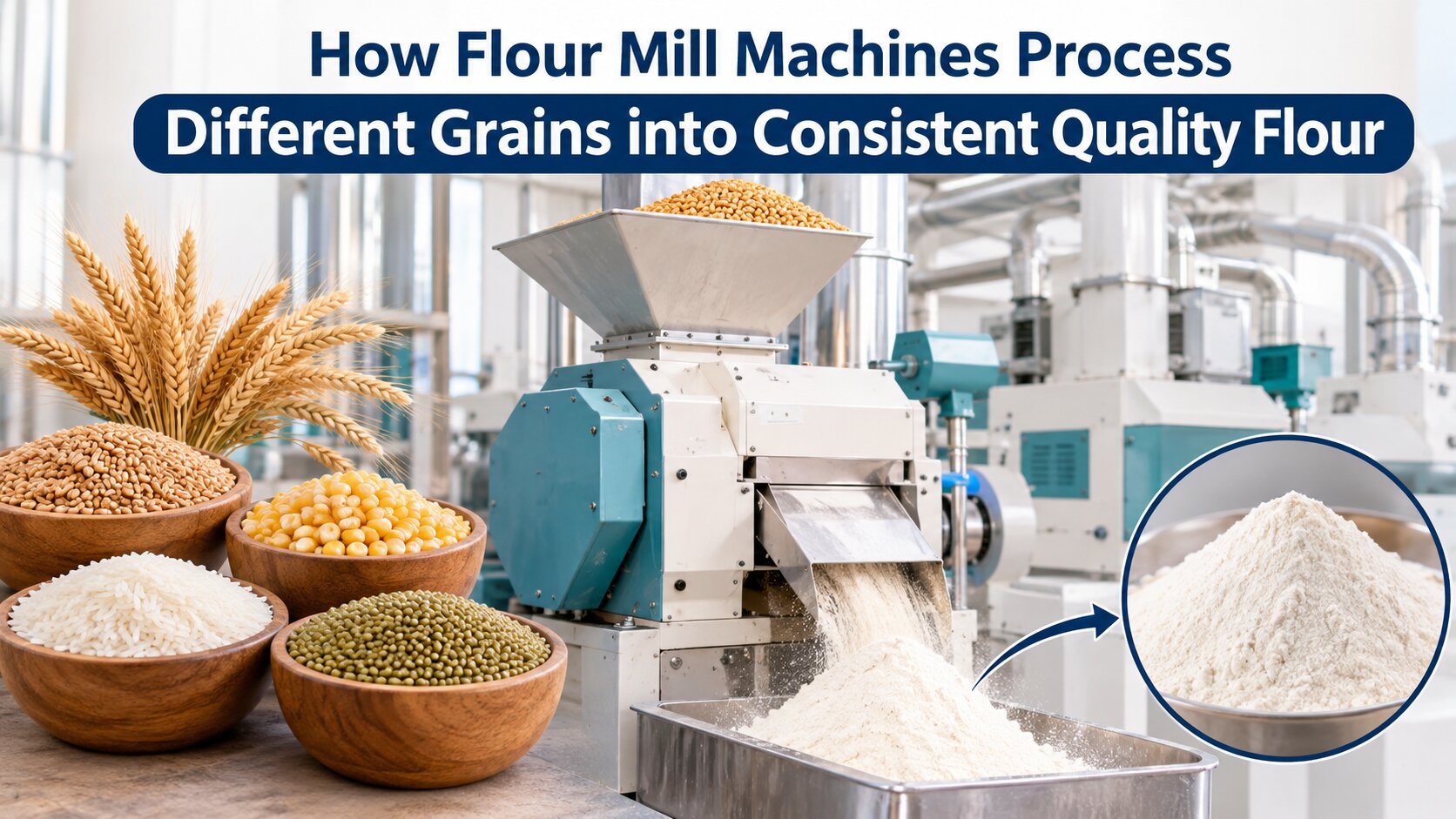
A flour mill machine is designed to convert whole grains into flour through mechanical grinding. Depending on its design, it may use grinding stones, rollers, impact mechanisms, or other milling systems to reduce grain particles into the required consistency.
The basic working process begins when cleaned grains are fed into the machine through a hopper. The grinding mechanism then breaks down the grains into smaller particles. These particles may pass through sieves or other separation systems to achieve the desired flour texture.
The main components generally include:
-
Feeding hopper: Holds and directs grains into the grinding section.
-
Grinding mechanism: Breaks grains into smaller particles.
-
Motor: Supplies the power required for grinding operations.
-
Sieve or screening system: Helps control flour particle size.
-
Collection outlet: Allows processed flour to be collected.
-
Control system: Helps operators manage machine functions and operating settings.
The design and arrangement of these components vary according to machine capacity, grinding technology, and intended application.
2. Preparing Different Grains Before Grinding
Proper grain preparation is essential for achieving consistent flour quality. Raw grains may contain dust, small stones, husks, damaged kernels, and other unwanted materials. These impurities can affect the final product and may also cause unnecessary wear on machine components.
Before grinding, grains generally undergo cleaning and inspection.
Cleaning: Cleaning equipment removes dust, stones, and other foreign particles from the grain supply.
Moisture assessment: Grain moisture is checked because excessive or insufficient moisture can affect grinding performance and flour characteristics.
Sorting: Damaged, discoloured, or unsuitable grains may be separated to improve processing consistency.
Conditioning: Certain milling processes use controlled moisture adjustment and resting periods to prepare grains for grinding. This is particularly relevant in wheat milling, where conditioning helps separate the bran and endosperm during subsequent processing.
The preparation method depends on the type of grain and the flour required.
3. How Different Grains Are Processed into Flour
Different grains require different grinding approaches because their hardness, structure, oil content, and moisture characteristics are not identical.
Wheat Grinding
Wheat is one of the most commonly processed grains in flour milling. Its kernels contain bran, germ, and endosperm, which contribute different nutritional and physical properties.
In conventional wheat milling, the grain passes through a series of grinding and separation stages. Roller mills may break the kernels gradually, while sieving systems separate particles according to size.
The resulting flour can be used for chapatis, bread, bakery products, and other food applications. Grinding conditions and separation methods influence flour texture and composition.
Maize Grinding
Maize kernels are relatively hard and have a different internal structure compared with wheat. They require suitable grinding settings to achieve the desired particle size.
Depending on the intended application, maize can be processed into coarse meal or finer flour. It is commonly used for traditional food preparations, snacks, bakery products, and other processed foods.
Rice Grinding
Rice is processed into rice flour for various culinary and industrial applications. The grain is generally cleaned and prepared before being passed through an appropriate grinding system.
Rice flour is used in products such as rice-based snacks, noodles, batters, and bakery formulations. The grinding process must be controlled to avoid excessive heat and achieve the required fineness.
Millet Grinding
Millets such as pearl millet, finger millet, and sorghum are increasingly used in traditional and modern food products.
These grains have different physical properties, so their processing requirements can vary. Suitable grinding equipment helps produce flour for rotis, porridge, snacks, and other food preparations.
Pulses and Other Grains
Some milling systems can also process selected pulses and other agricultural materials. However, suitability depends on the machine design, material characteristics, and required output.
Using appropriate grinding settings helps maintain product consistency and prevents unnecessary strain on the equipment.
4. Factors That Influence Flour Quality During Grinding
Producing consistent flour requires more than simply crushing grains. Several operating factors influence the texture, colour, composition, and overall quality of the finished product.
Grinding Speed: The speed of the grinding mechanism affects how quickly grains are processed and how much heat is generated. Appropriate speed settings help achieve the required particle size.
Grain Moisture: Moisture content influences the hardness and grinding behaviour of grains. Maintaining suitable moisture levels helps improve processing consistency.
Particle Size: Different food applications require different flour textures. Fine flour may be preferred for certain bakery products, while coarser flour is suitable for other preparations.
Machine Temperature: Excessive heat during grinding may affect certain nutritional and physical properties of flour. Proper machine operation and maintenance help control unnecessary heat generation.
Screen Selection: Sieves and screening systems help separate flour particles according to size. Selecting suitable screens is important for maintaining uniformity.
Monitoring these factors allows operators to maintain consistent production standards and reduce variations between batches.
5. Importance of Choosing the Right Grinding Technology
Different flour milling systems are designed for specific processing requirements. Understanding their working mechanisms helps businesses select suitable equipment.
-
Stone Grinding System: Uses grinding stones to process grains into flour. It is commonly associated with traditional flour milling and household atta preparation.
-
Roller Milling System: Uses rotating rollers to gradually break down grains. It is widely used in commercial wheat processing and large-scale milling operations.
-
Impact Grinding System: Uses mechanical impact to reduce grain particles into smaller sizes. Its suitability depends on the grain and desired flour characteristics.
-
Hammer Mill System: Uses rotating hammers to break materials into smaller particles. It can be used for different agricultural and food-processing applications, depending on its configuration.
The choice of technology depends on the grain type, production capacity, desired flour texture, energy consumption, and business requirements.
6. How an Atta Chakki Plant Supports Commercial Flour Production
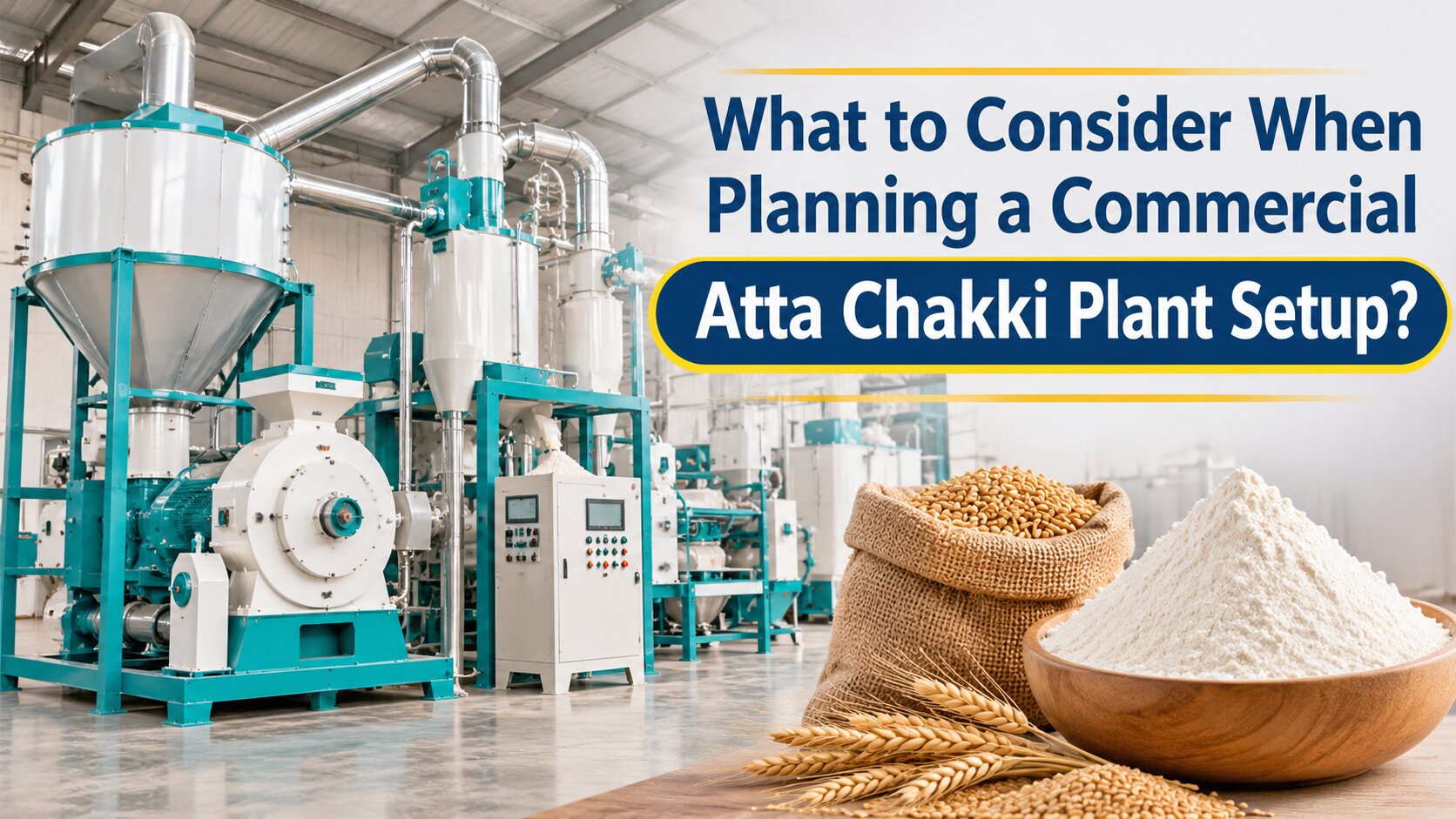
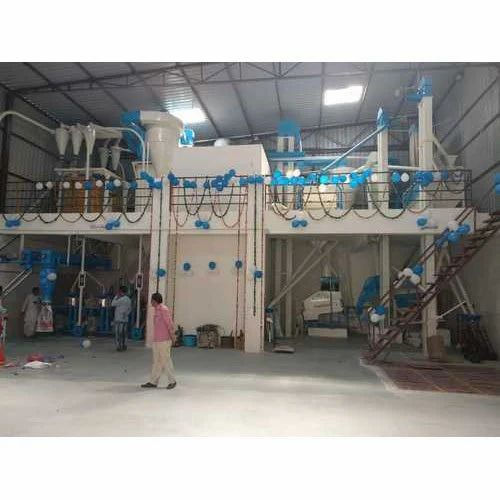
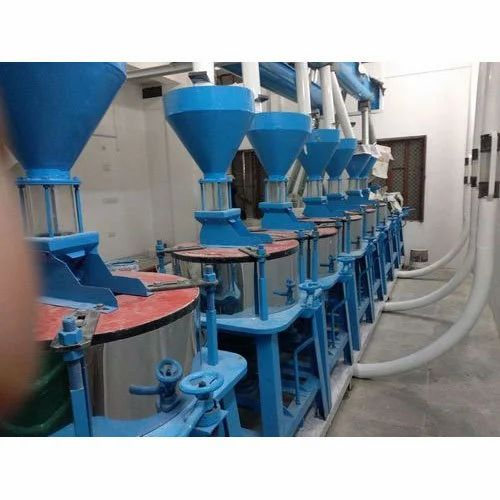
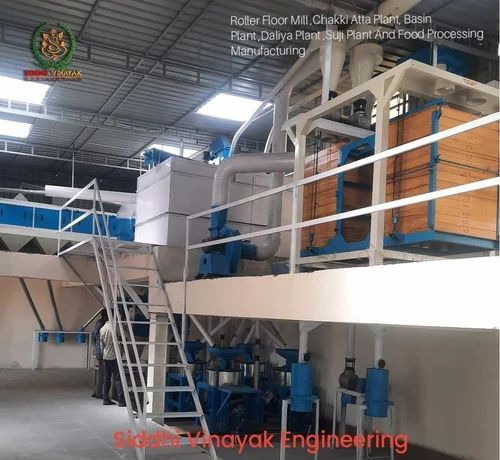
An atta chakki plant is designed to process wheat into flour for household, retail, and commercial requirements. Depending on its configuration, a plant may include grain feeding, cleaning, grinding, sieving, and flour collection arrangements.
For businesses planning to establish a flour production unit, understanding the complete processing setup is important. An atta chakki plant machine can be selected according to the expected production volume, available space, and operational requirements.
Important considerations include:
-
Required wheat grinding capacity per hour.
-
Type and quality of grinding mechanism.
-
Motor power and electricity requirements.
-
Flour collection and storage arrangements.
-
Ease of cleaning and maintenance.
-
Availability of spare parts and technical support.
A properly planned milling setup helps streamline grain processing and supports regular flour production.
7. Role of Automation in Modern Flour Milling
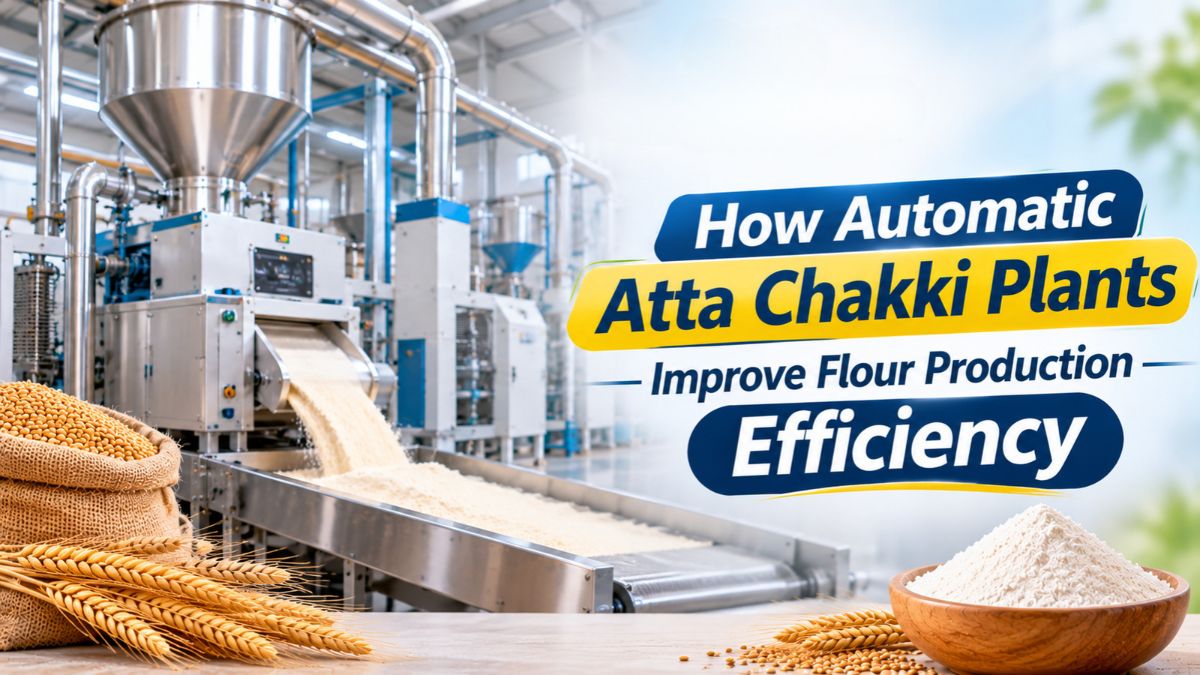
Automation has changed how commercial flour processing units manage their daily operations. Modern systems can include automated grain feeding, controlled grinding, material handling, and monitoring arrangements.
An automatic atta chakki plant may integrate different processing stages into a coordinated production system. Depending on the design, automation can reduce repetitive manual activities and help operators maintain more consistent operating conditions.
Some important advantages of automated milling arrangements include:
Controlled Feeding: Automated feeding systems help maintain a steady supply of grains to the grinding section.
Operational Monitoring: Control panels and sensors may help operators monitor machine performance and identify operating variations.
Improved Production Management: Integrated equipment can help coordinate different processing stages and reduce unnecessary handling.
Reduced Manual Work: Automation can minimise certain repetitive tasks and improve workflow management.
However, automation does not eliminate the need for skilled operators, regular inspections, and preventive maintenance.
8. Maintenance Practices for Consistent Flour Production
Regular maintenance is necessary to maintain machine performance, reduce unexpected breakdowns, and support consistent flour production.
Some useful maintenance practices include:
-
Clean the machine regularly: Remove accumulated flour and grain particles from accessible machine areas.
-
Inspect grinding components: Check stones, rollers, hammers, and other grinding parts for wear or damage.
-
Check motor performance: Monitor unusual noise, overheating, vibration, and electrical issues.
-
Examine sieves and screens: Replace damaged or blocked screens to maintain proper particle separation.
-
Follow lubrication instructions: Lubricate applicable components according to the manufacturer's recommendations.
-
Schedule preventive inspections: Regular servicing helps identify minor problems before they affect production.
Before performing maintenance, operators should follow the manufacturer's safety instructions and ensure that the machine is properly isolated from its power supply.
9. How to Select a Reliable Flour Milling Equipment Manufacturer
Choosing suitable machinery is an important investment decision for flour processing businesses. Buyers should evaluate equipment specifications, production requirements, construction quality, and after-sales support before finalising an order.
A reliable flour mill machine manufacturer should provide clear information about grinding capacity, motor specifications, machine dimensions, grain compatibility, and maintenance requirements.
Consider the following points when comparing equipment suppliers:
-
Experience in manufacturing flour processing machinery.
-
Availability of different machine capacities and configurations.
-
Quality of construction and grinding components.
-
Technical assistance during installation.
-
Availability of spare parts and maintenance services.
-
Clear information about energy consumption and operating costs.
Businesses planning a new milling unit should also discuss whether an atta chakki plant machine or an integrated automatic atta chakki plant would be more appropriate for their production goals.
Comparing these requirements before purchasing machinery can help businesses select equipment that supports their long-term processing needs.
Conclusion
Processing different grains into consistent quality flour requires suitable machinery, proper grain preparation, controlled grinding conditions, and regular equipment maintenance. Wheat, maize, rice, and millets each have different processing requirements, making machine selection an important part of flour production.
Modern milling systems help businesses manage grinding operations, maintain particle-size consistency, and improve production efficiency. Whether establishing a small flour processing unit or a large commercial facility, selecting equipment according to grain type, production capacity, and operational requirements can support reliable results.
Working with an experienced manufacturer also helps businesses understand machine specifications, installation requirements, and maintenance practices before investing in flour milling equipment.
Frequently Asked Questions (FAQs)
1. What types of grains can be processed using a flour mill machine?
Depending on its design, a flour mill machine can process wheat, maize, rice, millets, and certain other grains into flour of different textures.
2. How does a flour mill machine maintain consistent flour quality?
It uses suitable grinding mechanisms, controlled feeding, and screening systems to achieve the required particle size. Proper grain preparation and machine maintenance also contribute to consistency.
3. What is the difference between a domestic and commercial flour mill?
Domestic flour mills are generally designed for smaller quantities and household requirements, whereas commercial machines are built to handle higher production volumes and longer operating hours.
4. What factors should be considered before purchasing an atta chakki plant?
Important factors include production capacity, motor power, grinding technology, electricity requirements, available space, maintenance needs, and the type of flour required.
5. What are the benefits of an automatic atta chakki plant?
An automated plant can simplify grain feeding, coordinate processing stages, reduce repetitive manual work, and support efficient production management.